Daily language learning habit: build one that sticks
Stop relying on willpower. Seven proven strategies, three daily schedules, and a tracking method to make practice automatic.

Most people don't fail to build a daily language learning habit because they lack talent or the right app. They fail because they can't make practice a reliable daily event. Life gets busy, motivation fades after week two, and suddenly that "I'll study tonight" intention quietly disappears into another Netflix episode. Sound familiar? That's not a character flaw. That's a design problem.
Building a consistent language learning routine is less about grinding out willpower and more about engineering your environment so that practice happens almost automatically. The techniques that make this work - habit stacking, micro-sessions, and smart environment design - are grounded in behavioral science, and they apply to any language, any schedule, and any starting level. Watching how dedicated language apps like Artikulera build their habit loops gives us a useful blueprint. The same logic scales to whatever language you're learning.
This guide walks you through seven practical strategies, three ready-to-use daily schedules, and the one tracking principle that keeps you consistent even when life gets messy.
Why willpower is the wrong foundation for a daily language learning habit
The motivation trap most learners fall into
Motivation works in spikes. You feel fired up the first week, maybe the second, and then the novelty wears off and that initial emotional charge disappears. Willpower is a finite resource that depletes throughout the day, which is why "I'll study after dinner" rarely survives a stressful Tuesday. The cue-routine-reward framework from habit research explains why durable habits feel different: every automatic behavior has a trigger that starts it, a routine that runs it, and a reward that reinforces it. The goal is to engineer the trigger and the reward, not wait for motivation to show up.
What consistent learners actually do differently
Successful language learners don't feel more motivated than everyone else. They've simply removed the daily decision of whether to practice. The behavior runs on autopilot because the system does the prompting, not their mood. Research on session length backs this up: brief, focused daily practice consistently outperforms longer, irregular sessions for both vocabulary retention and motivation. Ten to twenty minutes every day produces more durable learning than a ninety-minute Saturday cram session, and it's far easier to protect on a busy week.
How to build a daily language learning habit with habit stacking
How habit stacking works for language learners
Habit stacking is the practice of linking a new behavior to an existing, stable anchor you already perform every day. The logic is straightforward: you borrow the neural momentum of an established routine to carry you directly into the new one. When the anchor fires, the new behavior follows. This removes the hardest part of any daily language learning habit - making the decision to start in the first place.
Building your own anchor + practice stack
Three pairings work especially well for language learners. After your morning coffee: open your app and do ten minutes of vocabulary review before you check your phone for anything else. During a commute or daily walk: queue up a fifteen-minute listening session so the travel time becomes study time. After brushing your teeth at night: run one quick flashcard review to close the day.
The sharper version of this is writing an implementation intention - a specific "if-then" plan you commit to in advance. "When I sit down with my morning coffee, I will open my app and do ten minutes of practice." That specificity is what makes it survive a busy week. Vague intentions like "I'll practice in the morning sometime" don't hold up against an inbox full of notifications.
Micro-sessions: why 10 focused minutes beats a 90-minute weekend binge
How long should a daily language learning habit session be?
Spaced, short sessions significantly outperform massed practice for long-term vocabulary retention. The sweet spot for daily language practice is ten to twenty minutes: long enough to generate genuine repetitions, short enough to feel manageable even on a difficult day. Consistency beats duration every time. A ten-minute session every single day produces more retention than a seventy-minute session once a week because spaced retrieval is how memory consolidates, and the daily trigger keeps the language alive in your working memory.
The best activities for a 10- to 30-minute window
Not all practice activities deliver equal results within a short window. Spaced repetition flashcards offer the highest yield for vocabulary and grammatical forms, so if you only have fifteen minutes or less, prioritize these first. Listening micro-sessions - a short podcast clip or audio at near-native speed - build comprehension and input volume efficiently. Speaking drills, including rapid-response exercises or shadowing, activate what you already know under time pressure and accelerate fluency.
A simple structure that ties these together: spend two to three minutes on spaced review, five to twelve minutes on the core activity, and close with one active production moment - speaking or writing a single sentence using what you just practiced.
Environment design: set up your surroundings so practice finds you
Reduce friction to near zero
Environment design means removing every barrier between you and your daily language learning habit before you need willpower to overcome it. Practical moves: keep your learning app on the first page of your home screen, set a daily practice alarm labeled with your specific goal ("10 min vocab, 7am"), and place a physical language notebook on your desk next to your coffee cup. The cue needs to be visible before the moment of decision arrives. Every time you pick up your phone, sit at your desk, or pour your morning coffee, the prompt is already in front of you.
Passive reinforcement: let your environment do the reminding
Passive reinforcement means small, repeated exposures throughout the day that keep the language front-of-mind without requiring a dedicated session. This is exactly the design philosophy behind Artikulera's home screen and lock screen widgets, which surface Swedish grammar rules throughout the day, and its streak reminders that fire at a time the user sets. Those features aren't decoration - they're engineered cues that reduce the cognitive distance between you and your next practice session. The language stays present in your peripheral awareness even between study windows, so when you sit down to study, it doesn't feel cold or unfamiliar.
Tracking your streak without letting perfection derail you
Why streaks work (and when they backfire)
Streaks are powerful because they turn consistency into a visible record you don't want to break. The psychology is real: seeing a chain of consecutive days practiced makes you more likely to show up on a hard day just to protect it. The risk, though, is perfectionism. One missed day can trigger an "I already broke it, so what's the point" spiral that ends a habit that was otherwise working well.
The "never miss twice" rule and simple tracking systems
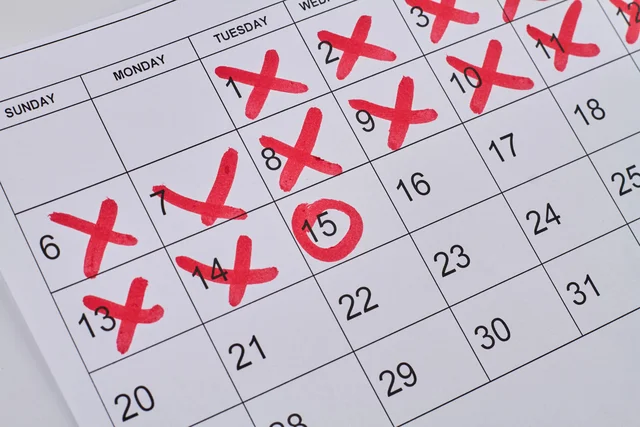
The antidote is the "never miss twice" rule: one missed day is an accident, two missed days is the start of a new, worse habit. Keep tracking simple, because the tool matters far less than the daily check-in ritual. A habit tracker in Notion, a Google Sheets calendar, or even a paper calendar with X's all work. Habit research consistently suggests that targeting around 70 to 80 percent consistency rather than perfection leads to more sustainable long-term practice. Give yourself that margin. It's not lowering the bar; it's making the bar realistic enough to clear for months on end.
How an app handles the moment you miss a day matters more than it might seem. Artikulera builds the safety net in directly: a grace day activates automatically once every seven consecutive days of practice, so a busy Tuesday doesn't erase weeks of work. For longer breaks there's vacation mode, which pauses the streak entirely until you're ready to pick up again. The combination means the streak tracks genuine consistency without punishing normal life.
Sample daily language practice routines for 10, 20, and 30 minutes
The 10-minute routine (minimum effective dose)
This is the routine to default to on your busiest days. It keeps the daily language learning habit chain intact without requiring much energy or mental bandwidth.
- 3 minutes: Spaced repetition review of known vocabulary
- 4 minutes: Listen to a short audio clip at your current level
- 3 minutes: Say three sentences aloud using what you just reviewed
(If you'd like a ready-made minute-by-minute example for Swedish learners, see Practice Swedish in 10 Minutes: A Minute-by-Minute Plan.)
The 20-minute routine (solid daily practice)
This is your workhorse session. It balances review, new input, and active output without tipping into fatigue.
- 5 minutes: Spaced repetition review
- 8 minutes: New vocabulary in context (example sentences, not isolated words) or a short reading passage
- 7 minutes: Shadowing, a brief speaking task, or writing two to three sentences using the new material
The 30-minute routine (deep session)
Use this version when you have the time and mental energy to push into more challenging content. Beginners should keep content concrete and high-frequency. Advanced learners should actively seek native-level material that requires real effort to understand.
- 7 minutes: Review
- 12 minutes: Authentic content slightly above your current level, such as a podcast, article, or video
- 11 minutes: Active production: write a short summary, record a voice memo, or work through grammar drills targeting your weak spots
Build the system once, then let it run
Maintaining a daily language learning habit isn't about finding two free hours or summoning extraordinary discipline. It's about designing a system where showing up is the path of least resistance. Three pillars carry the whole structure: attach practice to an anchor habit so the cue is automatic, keep sessions short enough to be non-negotiable even on difficult days, and design your environment to provide the prompt before you have to think about it.
Start smaller than feels necessary. Pick one habit stack from this article, commit to it tomorrow morning, and run it for two weeks before adding anything else. One cue. One short routine. One check-in at the end. That is the entire system at launch, and it's enough to build real momentum.
For Swedish learners specifically, Artikulera was built with this exact habit architecture in mind. The widgets, daily streaks, spaced repetition scheduling, and Noun of the Day feature all exist to handle the cue-and-reward engineering for you, so your mental energy goes into the language itself. Whatever you're learning, the principle holds: design the system well, and the consistency takes care of itself.

Practice Swedish en/ett with Artikulera
Spaced repetition, 30 rules of thumb, and 4,500+ nouns. Free to download.
Free · iPhone & iPad · iOS 17.6+
Frequently asked questions
- How can I make language learning a daily habit that actually sticks?
- Treat it as a design problem rather than a willpower challenge: engineer triggers, routines, and rewards so practice happens automatically. Use techniques like habit stacking, micro-sessions, and smart environment design, and follow examples from apps like Artikulera to build a reliable daily loop.
- What is habit stacking and how do I use it for language study?
- Habit stacking links a new behavior to an existing, stable daily routine so the established habit becomes the cue for practice. Examples include: after morning coffee do ten minutes of vocabulary, queue a 15-minute listening session during your commute or walk, and run one quick flashcard review after brushing your teeth; write an if-then implementation intention to make it specific.
- How long should my daily language practice sessions be?
- Short, focused sessions of about 10 to 20 minutes every day outperform longer, irregular sessions for vocabulary retention and motivation. Brief daily practice is easier to protect during busy weeks and produces more durable learning than a 90-minute weekend cram.
- Why is willpower the wrong foundation for a daily language habit?
- Willpower and motivation come in spikes and deplete, so relying on them lets stress and distractions derail your plans. The cue-routine-reward framework is a better foundation because it creates automatic triggers and reinforcing rewards that do not depend on momentary motivation.
- What are micro-sessions and why do they work better than binge studying?
- Micro-sessions are short, focused practice periods that use spacing to improve long-term retention. They reduce friction to start studying, fit into busy days more easily, and consistently outperform massed practice for vocabulary and motivation.
- Can I use my commute or daily walk to learn a language?
- Yes - turn travel time into study time by queuing a 15-minute listening session or lesson so the commute becomes a built-in practice window. This is a practical habit-stacking pairing that converts otherwise unproductive time into consistent exposure.
- What tracking method keeps me consistent when life gets messy?
- Keep tracking simple and focused on whether you practiced each day rather than on perfect performance; a minimal daily check reinforces the habit loop. Aim for around 70 to 80 percent consistency rather than perfection - that margin makes the bar realistic enough to clear for months on end.