Best flashcard method for Swedish: Anki vs apps vs paper
Photo: Diana Samson / Scopio
Finding the best flashcard method for Swedish means solving a problem most learners never identify. They stare at a card, feel vague recognition, flip it over, and count that as a win. That passive review loop is a common pitfall, and it produces vocabulary that tends to disappear the moment you sit in front of a native speaker.
The fix is straightforward: design your system around recall speed, not recognition comfort. When we built Artikulera, the core insight was that Swedish learners don't just need to know the right answer; they need to reach it fast enough for conversation to flow. This guide walks you through picking the right Swedish flashcard setup, crafting cards that actually stick, and building a workflow you'll still be running three months from now.
Pick your system: the best flashcard method for Swedish learners
Paper flashcards done right
Paper is underrated, but only if you force it to work hard. Batch cards by theme, shuffle them aggressively before each session, then run timed speed rounds - 60 to 120 seconds is a practical starting point - with a kitchen timer. Track hits and misses with a simple tally. Any card you hesitated on goes straight back into the active rotation.
The advantage of paper is the absence of friction: no app to open, no settings to configure, no notification pulling your attention sideways. The disadvantage is that it doesn't handle interval scheduling for you. You have to manually cycle near-forgotten cards back in. Paper works well for speed drilling when you keep sessions short and actively penalize slow answers.
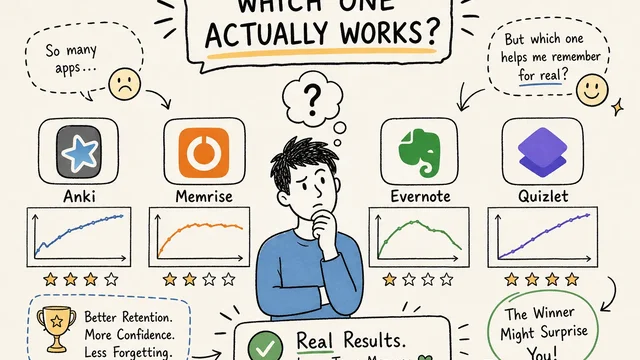
Anki Swedish decks to start with
Anki is the standard for a reason. The spaced repetition algorithm handles interval scheduling automatically, and the deck library on AnkiWeb gives you a starting point without building from scratch. You can browse AnkiWeb's shared Swedish decks to find frequency-based lists and pre-made courses that match your level. The "Swedish top 2000" deck (623 notes, 56 ratings on AnkiWeb) is a solid frequency-based option. The "Swedish/Svenska, A1-C2, zero to hero PART 2" deck shows significantly more downloads and is worth checking for broader coverage. Both are free starting points for building out your Swedish vocabulary decks.
After you grab a deck, do two things before you review a single card: add audio where it's missing, and delete duplicates or mistranslations. A bad card reviewed 50 times teaches you the wrong thing 50 times. Once the deck is clean, Anki gives you full control over tags, cloze formatting, and custom scheduling. The trade-off is real setup time and the discipline to come back daily. If your review queue piles up, Anki becomes a source of dread rather than progress. For a practical walkthrough on configuring Anki specifically for Swedish study, see this guide to learning Swedish with Anki.
Purpose-built apps for Swedish grammar
General flashcard apps are built for breadth. When you need depth on a specific grammar problem, a focused tool beats a general one every time. Swedish grammatical gender - the en/ett distinction - is exactly this kind of problem: it affects nouns, adjectives, definite forms, and plurals, and no frequency deck drills it systematically.
Artikulera is built specifically for this gap. It focuses on Swedish nouns and grammatical gender through learnable rules of thumb and a timed 5-star mastery system that rewards speed, not just correctness. The principle here is to match tool to task: use Anki for broad vocabulary coverage, and use Artikulera where you need deep, fast instinct for Swedish gender and noun forms.
Combining systems for full coverage
The best Swedish flashcard workflow isn't one tool; it's a deliberate combination. Paper plus a timer handles quick speed rounds on known vocabulary. Anki manages your growing frequency list across sessions, while Artikulera builds the grammatical gender instinct that needs to become automatic rather than effortful. Each tool does one thing well, and stacking them takes less than 20 minutes a day.
Speed over staring: why timed recall wins
What the research supports about spaced repetition for Swedish
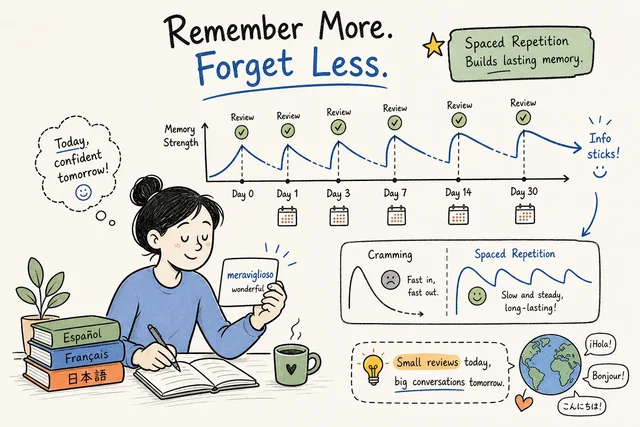
Spreading your sessions out outperforms cramming for long-term vocabulary retention. Second-language acquisition research consistently shows that learners who distribute practice across multiple sessions outperform those who study the same material in a single sitting, and the advantage holds on delayed tests weeks later. Retrieval practice across three to four spaced sessions is among the strongest predictors of post-training retention in vocabulary studies; see this study comparing spaced and massed practice for experimental evidence supporting spaced schedules.
On ideal intervals, the honest answer is that no single perfect schedule exists for everyone. What the evidence does support is reviewing before you forget, not after. A practical pattern: same day, next day, three to four days out, then weekly checks. Anki approximates this automatically; for paper decks, you run it manually.
Build speed into every session
Set a target of 1 to 3 seconds per answer, a widely used practitioner benchmark for conversational readiness. Say the answer out loud before you flip the card. If you can't reach it in that window, mark it wrong and move on. The goal is automaticity, which is a different cognitive state from careful retrieval. Slow recall means the item is still fragile; fast recall means it's accessible under real conversational pressure.
Artikulera's timed 5-star system operationalizes this directly. Faster correct answers earn higher stars. A slow "technically correct" answer scores lower than a fast confident one. That scoring logic forces you to train for the thing that actually matters in spoken Swedish: reflexive recall, not labored memory search.
Craft better cards: audio, context, and cloze that stick
Basic plus audio for new words
The simplest effective template is: Swedish word on the front with native audio, meaning plus a short example sentence on the back. The audio does more than help pronunciation - it locks in the spelling-to-sound mapping so you don't develop a silent reading habit where you "know" a word but can't recognize it spoken. For Swedish specifically, where vowel sounds differ significantly from English, skipping audio in your deck is a real cost.
Sentence-context cards for usage
Once a word is familiar as an isolated item, build a sentence-context card for it. Use short, real Swedish sentences that capture how the word behaves in actual usage: its typical collocations, its word-order position, whether it takes a preposition. Known words in the sentence act as anchors for the new one, reducing the mental load required to decode it.
Resist the temptation to put the English translation on the front. That creates a translation dependency that makes it harder to think in Swedish. Use images or Swedish definitions on the front whenever you can, a technique recommended across communicative language teaching approaches.
Cloze deletions for grammar and forms
Cloze cards are the most efficient format for Swedish grammar: prepositions, verb particles, adjective agreement, en/ett, definite suffixes, and plural endings. The format forces you to produce the missing form in context rather than just recognizing a rule from a list. Keep each cloze card to one fact. Include a one-line rule reminder on the back, not a paragraph-length explanation.
For Swedish noun gender specifically, a natural cloze card might show "Det är ___ bil" and ask you to supply "en", testing gender knowledge in a clear, unambiguous sentence context. That single card ties article choice to a real sentence without the grammatical ambiguity of more complex constructions. Design every card to force active recall in a realistic context, not isolated recognition.
Build a sustainable SRS workflow for Swedish
Set up in five steps
A sustainable workflow has five steps. First, pick a core frequency deck (Swedish top 2000 or a similar list). Second, add audio to cards that are missing it. Third, tag cards by theme so you can run focused custom sessions. Fourth, set a daily new-card limit of 10 to 20 words. Fifth, schedule a fixed time for reviews, not "whenever I get around to it."
That daily limit matters more than it looks. At 15 new words per day, you're adding roughly 450 words per month. At 20 per day, you're at 600 per month. Vocabulary research - Nation's work on lexical coverage is the most-cited reference here - suggests you need around 2,000 to 3,000 high-frequency words for comfortable everyday interaction. A sustained 15-word-per-day pace gets you there in four to six months without burning out. For a practical manual on how to structure Anki entries and schedules specifically for vocabulary building, consult Refold's guide to learning words with Anki.
Mobile flashcard workflow that fits real life
The most durable approach is three micro-sessions across the day. A 5-minute morning review clears overnight due cards. A short commute session handles new cards. An evening speed round pushes recently learned words toward automaticity. Total daily time: 15 to 20 minutes, maintainable in a way that single 45-minute sessions simply are not.
AnkiDroid and AnkiMobile both support offline mode, which is essential if your commute involves a subway. Artikulera's home screen and lock screen widgets are designed to surface en/ett patterns throughout the day, giving you passive reinforcement between active study sessions.
Daily limits that prevent burnout
Cap your daily review ceiling and hold new cards when you hit it. If you miss two days and come back to 200 due cards, lower your new-card limit for the next week until the queue is stable again.
Suspend "leech" cards - items you've failed three or more times - and move them to a problem list. Come back to them later with a rewritten card format, usually a cloze or sentence-context version instead of the basic card that wasn't working.
Benchmarks and progress tracking you can trust
Realistic targets by pace
Here's a simple planning table based on sustainable SRS workloads:
- 10 words/day: approximately 300 new words per month
- 15 words/day: approximately 450 new words per month
- 20 words/day: approximately 600 new words per month
- 30 words/day: approximately 900 new words per month, but retention risk rises without strong context cards
Pick a pace you can sustain for 8 to 12 weeks, not a pace that feels ambitious for three days. The learner who does 15 words every day for three months will dramatically outperform the one who does 30 words for two weeks and then quits.
What to track and how to react
Track three numbers: your ease factor average in Anki, your lapse count, and your average response time. A rising lapse count signals you're adding new cards faster than you're consolidating old ones. A dropping ease factor means cards are getting harder rather than easier, which often points to cards that lack enough context to be memorable. When either metric moves in the wrong direction, lower new cards for a week before diagnosing anything else.
Measure speed and stability, not just whether you got the answer right. A word you answer correctly in five seconds is not in the same cognitive state as a word you answer correctly in one second. Only the second version is ready for real conversation.
Make gender automatic: the best Swedish flashcard method for en, ett, and beyond
Rules that build instinct
Swedish grammatical gender is the single problem that trips up nearly every non-native speaker, including learners who have been studying for years. The reason isn't vocabulary size; it's that general apps treat en/ett as a side note rather than a system. Artikulera's rules-of-thumb approach covers a wide range of Swedish nouns through learnable patterns: noun endings, semantic categories, loanword origins, and other productive signals that help you make a confident guess on a word you've never seen before.
A mastery ring tracks how well each rule is internalized, not just whether you've reviewed it. The Daily Noun and home screen widgets reinforce those patterns between sessions, building exposure without any extra effort.
Timed mastery that rewards reflexes
The 5-star system in Artikulera is calibrated to push you past memory into reflex. A word you answer correctly but slowly earns fewer stars than one you answer instantly. Time Challenge mode specifically targets items you know intellectually but haven't yet automated. That distinction between "I remember it" and "I know it reflexively" is the entire gap between Swedish that requires effort and Swedish that flows.
Practice modes that mirror real grammar
Three practice modes cover the three forms that gender affects directly: article (en/ett), definite suffix (-en/-et), and plural ending. Getting the article wrong is a cascading error - it throws off the suffix and the plural. Training all three forms together, the way Artikulera structures it, is more integrated than drilling them in isolation. Custom noun lists can be built and shared with classmates via SMS, WhatsApp, or QR code, which makes it a practical tool for SFI students and university Swedish courses alike.
Combine Artikulera with Anki for complete coverage
The most effective best Swedish flashcard method pairs Artikulera for grammatical gender and noun forms with an Anki frequency deck for broader vocabulary. Artikulera handles the deep, systematic drilling that general apps skip. Anki handles the long tail of vocabulary acquisition across thousands of words. Neither tool is redundant. Together, they cover the two biggest gaps in self-directed Swedish learning: systematic grammar and consistent vocabulary growth. Specialize where it matters, and integrate tools for complete fluency.
Start small and build on what works
Choosing the best flashcard method for Swedish ultimately comes down to consistency over ambition. The learners who make the fastest progress aren't the ones with the most elaborate study plans - they're the ones who protect short, frequent sessions, design cards that force active recall, and track speed alongside accuracy. Timed retrieval is the differentiator between vocabulary that lives in a flashcard app and vocabulary that lives in your mouth.
Set up an Anki frequency deck this week with audio and a daily limit of 15 new words. Run speed rounds on paper for words you already know but answer slowly. For Swedish gender specifically, download Artikulera and start with the rules of thumb before you drill a single noun. The rules give you a framework; the drills build the reflexes. That combination is what turns studying Swedish into speaking Swedish.

Practice Swedish en/ett with Artikulera
Spaced repetition, 30 rules of thumb, and 4,500+ nouns. Free to download.
Free · iPhone & iPad · iOS 17.6+
Frequently asked questions
- What is the best flashcard method for learning Swedish?
- The article recommends a combined approach: use paper flashcards and timed drills for speed, Anki for spaced repetition and broad vocabulary maintenance, and Artikulera for targeted practice on Swedish grammatical gender. Each tool fills a specific role so that recall becomes fast enough for conversation rather than just comfortable recognition.
- How should I use paper flashcards effectively for Swedish?
- Batch cards by theme, shuffle them before each session, and run short timed rounds (60-120 seconds) with a kitchen timer. Track hits and misses with a tally and immediately return any card you hesitated on to the active rotation to prioritize speed over passive recognition.
- Is Anki a good choice for Swedish vocabulary study?
- Yes - Anki's spaced repetition automates interval scheduling and AnkiWeb offers starter decks like "Swedish top 2000" and "Swedish/Svenska, A1-C2, zero to hero PART 2". Before reviewing, add missing audio and remove duplicates or mistranslations so you don't reinforce errors, and commit to daily reviews to avoid backlog.
- How do I set up Anki specifically for Swedish study?
- After downloading a deck, add audio where it's missing and delete any duplicate or incorrect cards, then use tags, cloze deletions, and custom scheduling to tailor reviews. The article also points to a guide to learning Swedish with Anki for a practical walkthrough and warns that discipline is needed to keep your review queue from becoming overwhelming.
- What makes Artikulera different from general flashcard apps?
- Artikulera is purpose-built to train Swedish grammatical gender and noun forms using learnable rules of thumb and a timed 5-star mastery system that rewards speed, not just correctness. It's designed to build fast, automatic instincts for the en/ett distinction that frequency decks don't systematically drill.
- Should I use more than one flashcard tool for Swedish?
- Yes - the recommended workflow stacks tools: paper plus a timer for quick speed drills, Anki for long-term spaced repetition of vocabulary, and Artikulera for mastering grammatical gender. Combining systems lets each tool do the task it does best and provides fuller coverage than any single method.
- How can I stop relying on passive recognition and actually recall Swedish words fast?
- Design your practice around recall speed: force active recall with timed drills, penalize slow answers by returning them to active rotation, and avoid flip-and-recognize habits. Use paper drills for speed training, Anki to space repeated exposure, and Artikulera to automate gender and noun-form instincts so you can respond quickly in conversation.