Small talk about the weather in Swedish
Weather is Sweden's universal icebreaker. Whether you're in an elevator, at a bus stop, or meeting a neighbor, a comment about the weather opens almost any conversation.
Why weather talk matters in Sweden
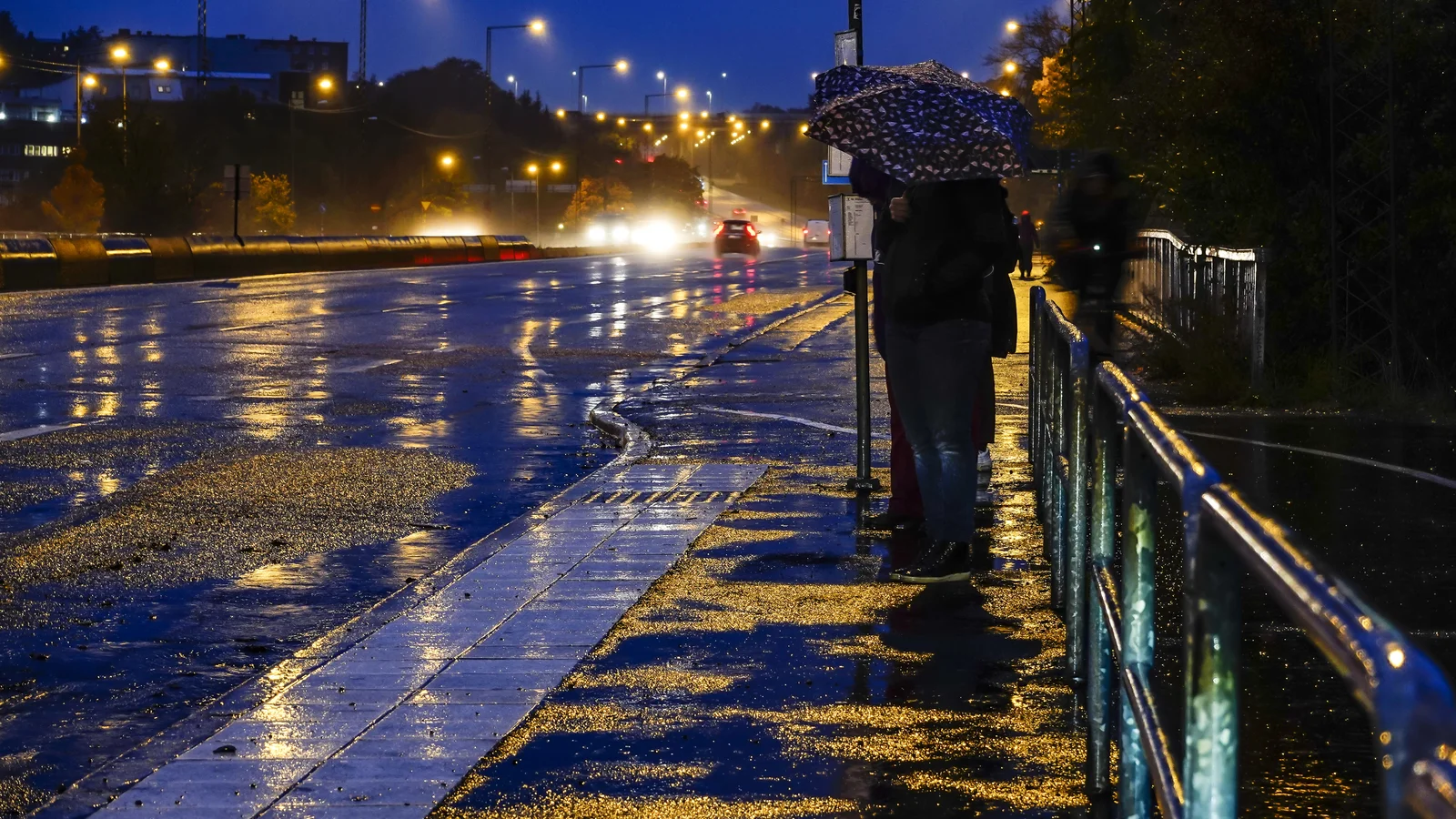
Sweden's climate is genuinely varied - long, dark winters, brief but beautiful summers, and a spring and autumn that can change week by week. The weather is not just a conversational filler; it is a shared daily reality. A rainy Tuesday in November in Stockholm is different from a bright June evening, and both are worth acknowledging.
Swedish communication style also plays a role. Swedes tend to be reserved with people they do not know well. Weather offers a neutral, low-risk topic that does not intrude on private life. Mastering a few weather phrases gives you a reliable way to start a conversation without overstepping.
The famous Swedish proverb
Perhaps the most important thing to know about Swedish weather culture is this saying:
"Det finns inget dåligt väder, bara dåliga kläder."
"There is no bad weather, only bad clothing." This phrase captures the Swedish attitude toward the outdoors: you do not wait for good weather, you dress for the weather you have. It is used to justify hiking in rain, cycling in wind, and sending children outside when adults from warmer climates would stay in. Knowing and quoting this saying will immediately signal cultural awareness.
Key weather vocabulary with gender
Most weather nouns in Swedish are ett-words: ett väder, ett solsken, ett regn, ett snöfall. But some are en-words: en storm, en dimma, en temperatur. Getting the gender right matters when you use definite forms: vädret (the weather), stormen (the storm), dimman (the fog).
| Swedish | English | Definite | Gender |
|---|---|---|---|
| väder | weather | vädret | ett |
| solsken | sunshine | solskenet | ett |
| duggregn | drizzle | duggregnet | ett |
| snöoväder | snowstorm | snöoväder | ett |
| storm | a storm | stormen | en |
| dimma | fog / mist | dimman | en |
| åskväder | a thunderstorm | åskväder | ett |
| temperatur | a temperature | temperaturen | en |
Start practicing these Weather words today in Artikulera
📲 Import 5 of these words into Artikulera
Scan the QR code or tap the link on your phone to add the list to your practice list instantly.
Add to ArtikuleraRequires the app to be installed.
Weather adjectives and comparisons
Swedish adjectives agree with the gender of the noun. With ett-words like väder, add -t: vackert väder, kallt väder, soligt väder. With en-words like dag, no suffix: en varm dag, en blåsig dag.
Comparisons follow a regular pattern: kallt - kallare - kallast (cold - colder - coldest), varmt - varmare - varmast (warm - warmer - warmest). This makes it easy to upgrade your weather comments: "Det är kallare idag än igår." (It is colder today than yesterday.)
| Adjective (neuter) | English | Example |
|---|---|---|
| soligt | sunny | ett soligt väder |
| mulet | overcast / cloudy | ett mulet väder |
| ruggigt | miserable / chilly and grey | ett ruggigt höstväder |
| blåsigt | windy | en blåsig dag |
| regnigt | rainy | ett regnigt helgväder |
| halvklart | partly cloudy | ett halvklart väder |
| friskt | brisk / fresh (mild cold) | ett friskt väder |
| isigt | icy | ett isigt vinterväder |
Ready-made phrases to start a weather conversation
These phrases work in almost any setting - a lift, a bus stop, the entrance to a building, or meeting a neighbor by the post boxes. They are short, friendly, and complete in themselves:
- "Vilket väder vi har haft!" - What weather we've had!
- "Det är ju ruggigt ute." - It's miserable outside, as you can see.
- "Äntligen lite sol!" - Finally some sun!
- "Har du hört prognosen?" - Have you heard the forecast?
- "Det ska bli bättre i helgen." - It's supposed to get better at the weekend.
- "Typiskt Sverige - sol och regn på samma dag." - Typical Sweden - sun and rain on the same day.
Seasonal language
Swedish has specific vocabulary for seasonal conditions that does not translate word-for-word into English. Novembergrå describes the flat, grey light of November. Islossning is the spring thaw when ice breaks up on rivers and lakes - a genuine event worth watching. Midsommarväder (midsummer weather) carries expectations of warmth, even if the actual weather often disappoints. Knowing these seasonal references helps you understand Swedish weather comments that go beyond simple adjectives.
The seasons themselves are reliable conversation material. "Sommaren verkar äntligen ha kommit." (Summer seems to have finally arrived.) or "Hösten är tidigt i år." (Autumn is early this year.) are natural openers that carry genuine content beyond the weather itself.

Practice Swedish en/ett with Artikulera
Spaced repetition, 30 rules of thumb, and 4,500+ nouns. Free to download.
Free · iPhone & iPad · iOS 17.6+
Frequently asked questions
- Why is weather such a common topic in Sweden?
- Weather in Sweden varies dramatically - from dark, cold winters with little daylight to bright, warm summers with almost no night. This constant variation makes it genuinely relevant every day. Swedes are also culturally reserved with strangers, and weather is a safe, neutral topic that does not intrude on personal life. Starting a conversation with 'Vilket väder vi har haft!' (What weather we've had!) is low-risk and universally understood.
- What does 'Det finns inget dåligt väder, bara dåliga kläder' mean?
- The phrase means 'There is no bad weather, only bad clothing.' It reflects a deeply Swedish attitude: outdoor life continues regardless of conditions, and the right gear makes all weather tolerable. The saying is used to encourage outdoor activity, explain why Swedes still walk, hike, and cycle in rain or cold, and gently tease anyone who complains about the weather while staying inside.
- How do Swedish adjectives for weather change by noun gender?
- Swedish adjectives agree with the noun they describe. Weather nouns have different genders: ett väder (neuter), en dag (common), ett regn (neuter), en storm (common). With ett-words, the adjective takes a -t suffix: 'ett vackert väder' (beautiful weather), 'ett kallt regn' (cold rain). With en-words, no suffix: 'en kall dag' (a cold day), 'en stark storm' (a strong storm). When comparing, add -are (comparative) and -ast (superlative): kallt, kallare, kallast.
- What is a typical weather greeting between Swedes?
- A short acknowledgment of current conditions is the most natural opener: 'Vilket väder!' (What weather!), 'Det är ju fruktansvärt ute.' (It's terrible outside, as you can see.), or 'Äntligen lite sol!' (Finally some sun!). These phrases are complete in themselves and invite a response without demanding one. They work in elevators, queues, and with neighbors - anywhere a brief connection is appropriate without requiring a longer conversation.