Public transport in Sweden - unwritten rules, blippa, and the tyst kupé
Swedish buses and trains run reliably and on time. But every system has unspoken rules. Knowing them means you blend in rather than stand out - for the wrong reasons.
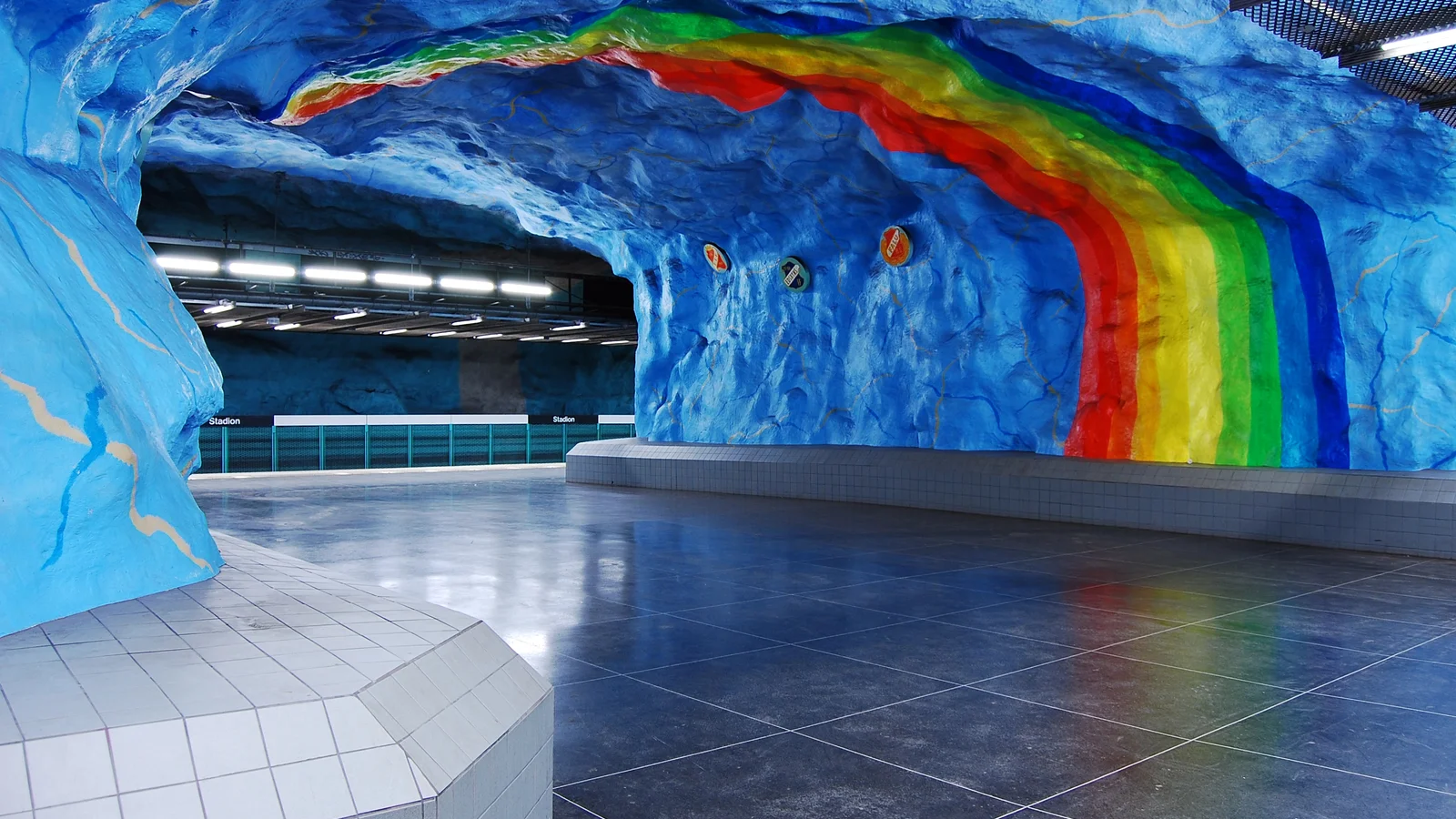
The networks - SL, Västtrafik, Skånetrafiken
Sweden's public transport is organized by region. The three largest networks are:
- SL (Storstockholms Lokaltrafik) - Stockholm's metro, buses, trams, and commuter trains
- Västtrafik - Gothenburg and western Sweden (buses, trams, ferries)
- Skånetrafiken - Scania / Malmö and southern Sweden
Each network has its own app and travel card. Single cash tickets exist but are considerably more expensive than buying a travel card or using contactless payment. Download the relevant app before you need it - it also shows real-time departures and handles delays.
Blippa - how to pay
The verb att blippa (to tap/scan) describes the act of validating your journey. You blippa your travel card, bank card, or phone against the yellow reader at the entrance of a bus, tram, or metro station. Listen for the confirmation sound. If you forget to blippa, inspectors (biljettinspektörer) do random checks and fines are immediate and significant. There is no grace period.
On Stockholm's commuter trains and long-distance SJ trains, a separate platsbiljett (seat reservation) is required for certain services even if you have a travel card or pass. Check before boarding.
The unwritten rules of Swedish commuting
Swedish public transport has a clear code of conduct that nobody writes down but everyone follows:
- No phone calls - if you must call, speak very quietly and keep it short. Loud phone conversations draw silent but unmistakeable disapproval.
- Seat spacing - if empty rows are available, do not sit directly next to a stranger. Leave a gap. Choosing the seat next to the only occupied seat in an empty carriage is socially remarkable.
- Priority seats - blue-marked seats near the doors are for elderly, pregnant, and disabled passengers. Vacate them without being asked.
- No eye contact - sustained eye contact with strangers on public transport is unusual and slightly uncomfortable in Swedish culture. Looking at your phone or out the window is the default.
- No smelly food - eating is generally tolerated, but strong-smelling food draws the same silent disapproval as phone calls.
The tyst kupé - silence carriage
Long-distance Swedish trains (operated by SJ and regional operators) typically include a tyst kupé (quiet zone). In this carriage, silence is not just requested - it is enforced. Other passengers will quietly but directly tell you if you make a call, play audio without headphones, or have a loud conversation. The tyst kupé is marked with signage and is usually the first or last carriage.
Swedish commuters take the tyst kupé seriously. It is one of the few public spaces where the norms are actively upheld. If you want to make calls or talk freely, sit in a different carriage.
Grammar focus - location vs motion pairs
Swedish has paired forms for spatial words: one for location (already there) and one for motion (moving in that direction). This distinction does not exist in English and requires conscious practice:
| Location | Meaning | Motion | Meaning | Examples |
|---|---|---|---|---|
| inne | inside (location) | in | into (motion) | Jag sitter inne. / Gå in! |
| ute | outside (location) | ut | outward (motion) | Jag väntar ute. / Gå ut! |
| uppe | up / upstairs (location) | upp | upward (motion) | Jag är uppe. / Gå upp! |
| nere | down / downstairs (location) | ner | downward (motion) | Jag är nere. / Gå ner! |
| hemma | at home (location) | hem | homeward (motion) | Jag är hemma. / Åk hem! |
Key vocabulary with gender
Transport nouns in Swedish include many en-words: en hållplats (stop), en linje (line), en rusningstid (rush hour), en platsbiljett (seat reservation). Some are ett: ett byte (connection), ett resekort (travel card). The definite form confirms: hållplatsen, linjen, bytet, resekortet.
| Swedish | English | Definite | Gender |
|---|---|---|---|
| hållplats | a bus / tram stop | hållplatsen | en |
| perrongbiljett | a platform ticket | perrongbiljetten | en |
| tyst kupé | a quiet zone / carriage | tysta kupén | en |
| rusningstid | rush hour | rusningstiden | en |
| platsbiljett | a seat reservation | platsbiljetten | en |
| resekort | a travel card | resekortet | ett |
| linje | a line / route | linjen | en |
| byte | a transfer / connection | bytet | ett |
Start practicing these Public Transport words today in Artikulera
📲 Import 3 of these words into Artikulera
Scan the QR code or tap the link on your phone to add the list to your practice list instantly.
Add to ArtikuleraRequires the app to be installed.

Practice Swedish en/ett with Artikulera
Spaced repetition, 30 rules of thumb, and 4,500+ nouns. Free to download.
Free · iPhone & iPad · iOS 17.6+
Frequently asked questions
- What does 'blippa' mean in Swedish?
- 'Blippa' is an informal verb meaning to tap or scan your travel card or phone against a reader to pay for or validate your journey. It comes from the sound the scanner makes. 'Blippa kortet' means tap/scan the card. Most Swedish public transport systems - SL in Stockholm, Västtrafik in Gothenburg and western Sweden, Skånetrafiken in the south - use contactless card or app payment. Buying single tickets in cash at the barrier is possible but significantly more expensive. Getting a travel card or using the relevant app saves money on every journey.
- What is the tyst kupé and what are the rules?
- The tyst kupé (quiet zone/carriage) is a designated section of Swedish long-distance trains where silence is strictly expected. No phone calls, no loud music, no conversations above a quiet murmur. It is one of the few places in Swedish public life where the social norm is actively enforced: other passengers will tell you, politely but directly, if you are violating the silence. The tyst kupé is marked with signage and usually the first or last carriage. Swedish commuters treat it seriously - it is not merely a suggestion.
- What are the unwritten rules of Swedish commuting?
- Swedish public transport has several unspoken norms. Do not make phone calls on buses or trains - if you must call, speak very quietly and keep it brief. Do not sit next to someone if empty rows are available: leave a seat between people when possible. Give up priority seats (marked with blue stickers) to elderly, pregnant, and disabled passengers without waiting to be asked. Do not make sustained eye contact with strangers. Do not eat strongly smelling food. These norms are not enforced by rules but by the social pressure of a culture that values personal space and quiet in public.
- What is the difference between 'inne' and 'in', 'ute' and 'ut' in Swedish?
- Swedish distinguishes between location and motion for spatial words. 'Inne' means inside (location: already there), 'in' means into (motion: moving inward). 'Ute' means outside (location), 'ut' means outward (motion). So 'Jag sitter inne på tåget' (I am sitting inside the train - location) vs 'Jag går in i tåget' (I am getting on the train - motion). The same pattern applies to 'uppe/upp' (up/upward), 'nere/ner' (down/downward), 'hemma/hem' (at home/homeward). This distinction does not exist in English and takes practice to apply consistently.