Swedish workplace culture - flat hierarchies, fika, and consensus
Swedish offices are informal, flat, and built around agreement rather than authority. For anyone arriving from a more hierarchical culture, this requires adjustment. Here is what to expect.
The du-reform - everyone is "du"
One of the most visible features of Swedish workplace culture is the near-universal use of first names. This flows from du-reformen - a sweeping social change in the late 1960s and early 1970s that replaced formal titles with the single pronoun du. Before the reform, addressing a doctor, a teacher, or a manager required careful use of title and third-person phrasing. After it, Sweden became one of the world's flattest cultures of address.
In practice: you call your manager by their first name. You call the company CEO by their first name. Job advertisements use du to address the applicant. Performance reviews use first names throughout. There is no professional context in modern Sweden where using a title instead of a first name is expected - and doing so can feel stiff or even slightly strange.
Flat hierarchy - what it looks like in practice
Swedish workplaces tend to have fewer visible status differences than in many other countries. Open-plan offices are common, including for senior managers. Dress codes are often casual. Doors are literally open. The expectation is that anyone can raise an issue with anyone else, regardless of seniority.
This does not mean there is no hierarchy - it is simply less visible. Senior people do make final decisions. But the path to those decisions usually involves more consultation, more listening, and more weighing of input from all levels than people from more hierarchical cultures expect.
Konsensuskultur - decisions by agreement
Swedish meetings can feel slow to people used to a culture where a senior person decides and others implement. In Sweden, the goal of a meeting is typically to reach konsensus - a shared agreement that everyone has contributed to and accepts. This takes time. People are expected to voice disagreement openly, and staying silent is not treated as agreement.
The lagom principle applies here too: not too fast, not too slow, not too bold, not too timid. The process values group cohesion. Once a decision is made through consensus, implementation tends to be smoother because everyone has already bought in.
Useful phrases for meetings and expressing opinions
Swedish uses subordinate clauses with att and eftersom to express opinions and reasoning - essential in meeting culture:
- "Jag tror att vi borde..." - I think we should...
- "Jag håller med om att..." - I agree that...
- "Vi gör så eftersom..." - We do it this way because...
- "Kan vi ta ett beslut om det här?" - Can we make a decision on this?
- "Jag skulle vilja lyfta en fråga." - I would like to raise a question.
Fika as workplace ritual
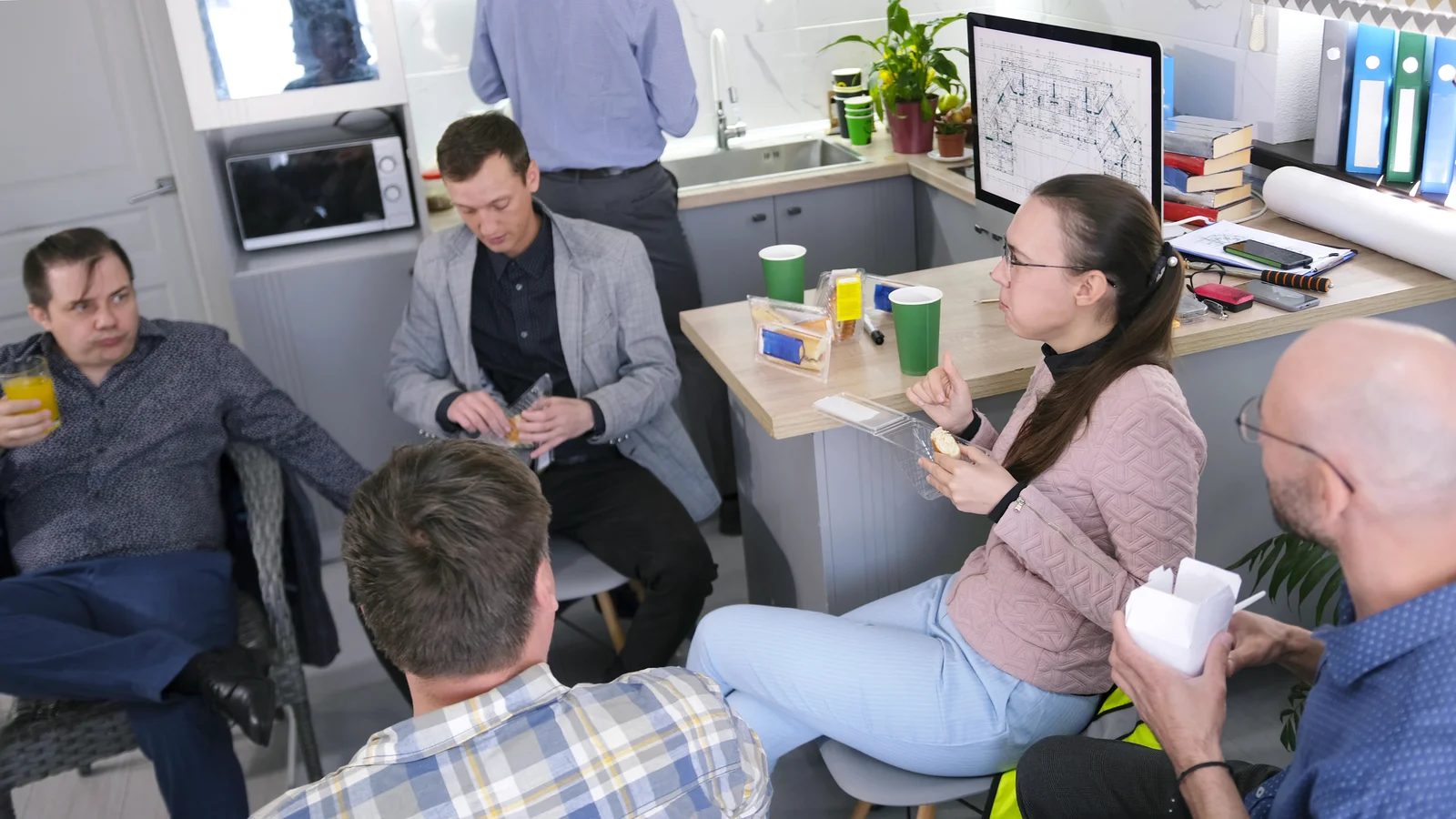
Fika in a Swedish office is not simply a coffee break - it is a structured collective pause. Most workplaces have a morning fika and an afternoon fika, often at a set time. Joining fika signals that you are part of the team. Missing it repeatedly sends a message of non-participation that is noticed even if nothing is said directly.
The fika table is where much informal communication happens. Quick decisions, introductions, and team cohesion all build through the fika ritual. Bringing something to share on your first day - or on your birthday - is common and appreciated.
Trade unions and parental leave
Sweden has high union membership and a strong tradition of collective bargaining (kollektivavtal). Joining your relevant fackförening is normal and many workplace benefits flow through it. Salary reviews (lönesamtal) are typically annual individual conversations rather than public or automatic raises.
Parental leave (föräldraledighet) is 480 days per child shared between parents. Long absences from work for parental reasons are entirely normal and planned for. Colleagues going on months of föräldraledighet is routine, not exceptional.
| Swedish | English | Definite | Gender |
|---|---|---|---|
| medarbetare | an employee / co-worker | medarbetaren | en |
| fackförening | a trade union | fackföreningen | en |
| lönesamtal | a salary review meeting | lönesamtalet | ett |
| föräldraledighet | parental leave | föräldraledigheten | en |
| kollektivavtal | a collective agreement | kollektivavtalet | ett |
| konsensus | a consensus | konsensus | en |
| möte | a meeting | mötet | ett |
| arbetsgivare | an employer | arbetsgivaren | en |
Start practicing these Workplace words today in Artikulera
📲 Import 6 of these words into Artikulera
Scan the QR code or tap the link on your phone to add the list to your practice list instantly.
Add to ArtikuleraRequires the app to be installed.

Practice Swedish en/ett with Artikulera
Spaced repetition, 30 rules of thumb, and 4,500+ nouns. Free to download.
Free · iPhone & iPad · iOS 17.6+
Frequently asked questions
- What is the du-reform and why does it matter?
- The du-reform (du-reformen) was a social shift in Sweden during the late 1960s and early 1970s that replaced formal address (using titles and the third person) with universal use of 'du' (you). Before the reform, addressing a colleague or superior incorrectly was a social risk. After it, everyone - from shop assistants to government ministers - became 'du.' For people arriving from cultures with formal and informal address forms, this flatness can be disorienting. There is no Swedish equivalent of 'vous' or 'Sie' in everyday professional contexts.
- What is konsensuskultur and how does it affect meetings?
- Konsensuskultur (consensus culture) means that Swedish workplace decisions typically require buy-in from everyone affected. Meetings in Sweden often feel long and inconclusive to people from cultures where a senior person decides and others implement. In Swedish workplaces, the goal is for everyone to feel heard and to reach a decision that the whole group accepts. This process takes longer up front but implementation tends to be faster and smoother. Expressing disagreement openly in a meeting is expected and valued - staying silent is not treated as agreement.
- Is fika really obligatory in a Swedish workplace?
- Fika is a structured pause, typically twice daily - once mid-morning and once mid-afternoon. In many Swedish workplaces, the morning fika is a near-mandatory collective ritual, not simply a coffee break you take at your desk. Missing it consistently signals that you are not part of the team. The fika is social glue: it is where informal relationships form, quick decisions get made, and new colleagues get to know each other. Bringing something to share on your first day - or on your birthday - is a common gesture that is noticed and appreciated.
- What is föräldraledighet and how does it shape Swedish workplace culture?
- Föräldraledighet (parental leave) is 480 days of paid leave per child, shared between parents. Sweden has one of the most generous parental leave systems in the world, and both mothers and fathers are expected to take significant time. This shapes workplace culture in several ways: long absences are normal and planned for, temporary cover is common, and managers are accustomed to teams changing composition. It also means colleagues may be away for months at a time - the word 'föräldraledig' (on parental leave) appears regularly in out-of-office messages.